
Make Sure the Estimates Describe the Same Project
Two asphalt driveway estimates can look similar at a glance and still cover very different work. One might include removing failed pavement and rebuilding sections of the base. Another might assume the existing driveway is suitable for a new surface layer. Comparing the totals alone will not tell you which proposal fits your property.
For homeowners around Clymer, Jamestown, Erie, and the surrounding P2 Paving service area, the most useful first step is a clear project description. Decide what you want the finished driveway to do, then compare how each estimate proposes to get there.
Define the Area and the Intended Use
Start with the driveway’s boundaries. Does the work cover the full length to the road, the parking area beside the garage, an extra vehicle space, or a combination of these? If dimensions differ between proposals, their prices are not directly comparable.
Explain how the driveway will be used. Ordinary passenger vehicles, a frequently parked work truck, and occasional deliveries present different information for a contractor to consider. Avoid assuming that a standard-looking driveway automatically has a standard scope.
It also helps to identify priorities. You might want to replace gravel, improve an awkward garage transition, repair recurring damage, or create more usable parking. Put those goals in writing so they do not get lost during price comparisons.
Look Closely at Removal and Base Preparation
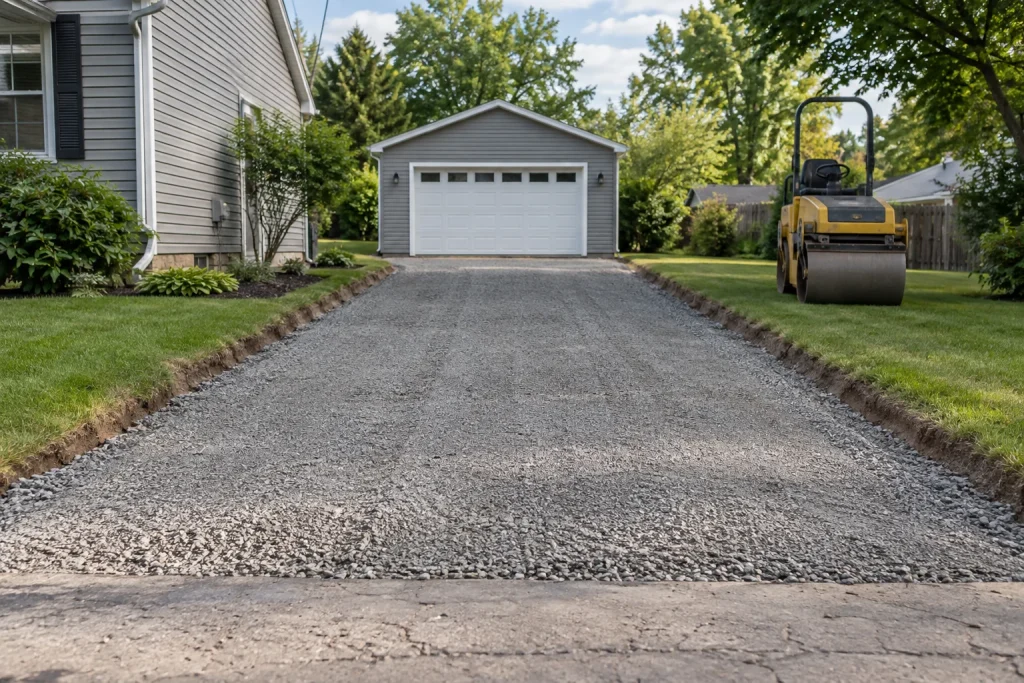
Much of a paving project happens before the visible asphalt surface is installed. That makes preparation one of the most important parts of an estimate to understand.
The National Asphalt Pavement Association’s driveway contractor guide recommends written bids that describe items such as site preparation, pavement thickness, drainage, and contract terms. Use those topics as questions rather than choosing a universal specification from an online article.
Ask each contractor to explain:
- What existing material will be removed and who will dispose of it?
- What base preparation is included in the quoted price?
- Which existing conditions are assumed to be suitable?
- How will unexpected unsuitable material be handled and priced?
- What grading or water-flow concerns are included in the scope?
An allowance or exclusion is not automatically a problem. The problem is discovering it only after work starts. Ask how extra work would be documented and approved before you incur an additional charge.
Understand What the Asphalt Specification Means
An estimate should describe the proposed pavement clearly enough for you to understand what is being installed. If thickness is listed, ask whether it describes material before or after compaction. Ask whether the project includes one layer or more than one, and why the proposed approach suits the driveway.
There is no need to arrive with a pavement design you found online. Instead, ask the contractor to explain the specification in relation to the existing conditions and intended use. A useful answer connects the proposed work to your property rather than relying on a vague description such as “heavy-duty blacktop.”
If you are comparing resurfacing with new or replacement driveway paving, request separate explanations. Those approaches involve different preparation and should not be treated as interchangeable bids.
Check Edges, Transitions, and Cleanup
Small details at the perimeter can affect how finished the driveway feels. Review where the asphalt will meet the garage, road entrance, sidewalk, and lawn. Ask how the edges will be finished and whether any adjoining surfaces need separate work.
Walk the proposed limits with the contractor if possible. A simple marked photo or sketch can help prevent disagreement about a widening, turnaround, or short section beside a building.
Clarify cleanup as well. Does the scope include removing demolition material, clearing loose debris, and addressing areas disturbed by the work? Avoid interpreting a general promise to “leave it clean” as a detailed agreement about landscaping restoration.
Ask About Access Before Choosing a Date
Driveway work affects daily routines. You may need somewhere else to park, a way to receive deliveries, or an accessible path to the house while vehicles cannot use the driveway.
Ask how much notice you will receive, what access restrictions to expect, and who will confirm when the pavement can be used. Also ask how weather-related changes will be communicated. Do not assume that an estimated work date and the date you can park on the finished surface are the same thing.
If you have visitors, a work vehicle, or a scheduled delivery, mention that early. It is easier to plan around a known need than to rearrange the project after equipment arrives.
Review the Written Terms
Before accepting a proposal, check the payment schedule, exclusions, and any written warranty terms. A verbal assurance is difficult to compare with a specific written commitment.
Keep a short comparison sheet with these headings:
- Project limits and dimensions.
- Removal, disposal, and base preparation.
- Asphalt specification and transitions.
- Access restrictions and scheduling communication.
- Exclusions, extra-work approval, and payment terms.
Leave a blank wherever an estimate does not answer a question. Then ask for clarification rather than filling that blank with an assumption. If a price is much lower, look for a difference in scope before deciding it represents the better value.
Start With a Clear Description of Your Property
You do not need to know every construction term to request a useful estimate. Photos, approximate dimensions, current concerns, and a description of how you use the driveway are a good starting point.
Contact P2 Paving to discuss your driveway project in Chautauqua County, NY, or Erie County, PA. A clearly defined scope makes the decision easier and helps you compare options with confidence.