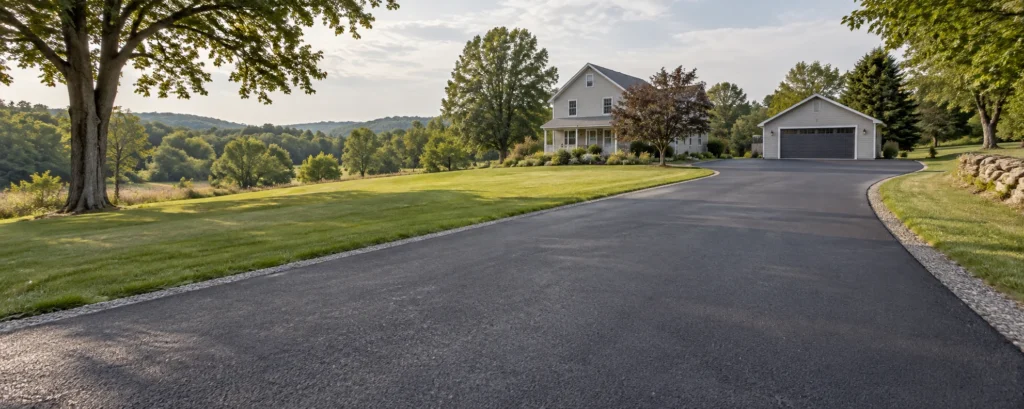

Know What You Are Asking Sealcoating to Do
A fresh, dark driveway can make a property look more cared for. But appearance is only one part of deciding whether sealcoating makes sense. Before booking the work, separate the condition of the asphalt surface from any damage that needs repair.
For homeowners and businesses in Chautauqua County, NY, and Erie County, PA, the useful question is not simply “Is my pavement faded?” It is “What maintenance does this pavement need, and what problems need a different treatment?”
What Sealcoating Is Intended to Do
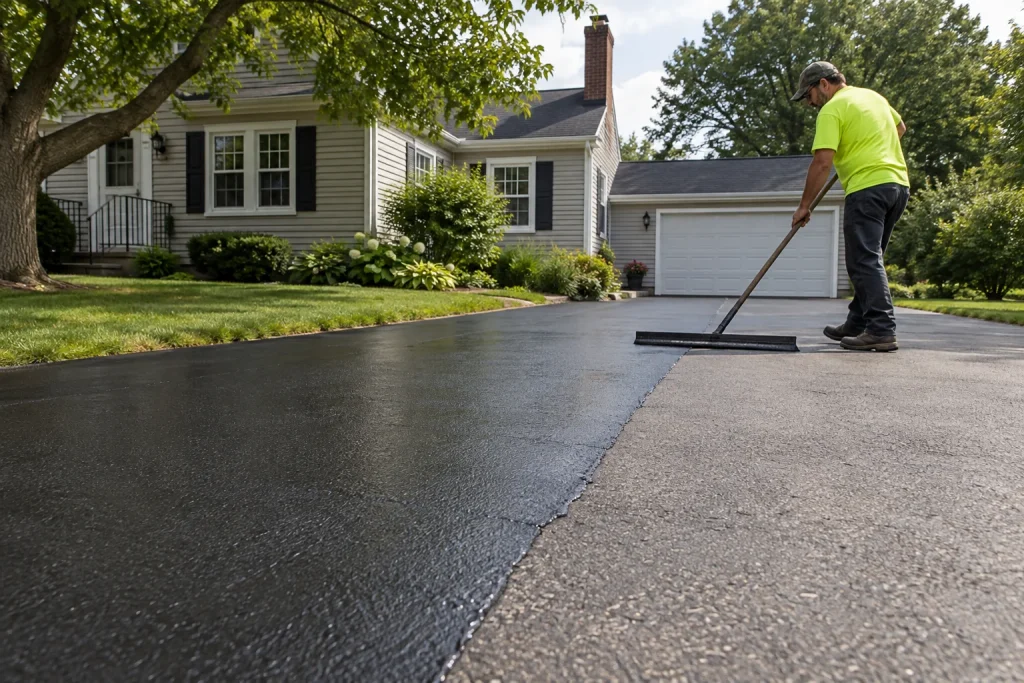
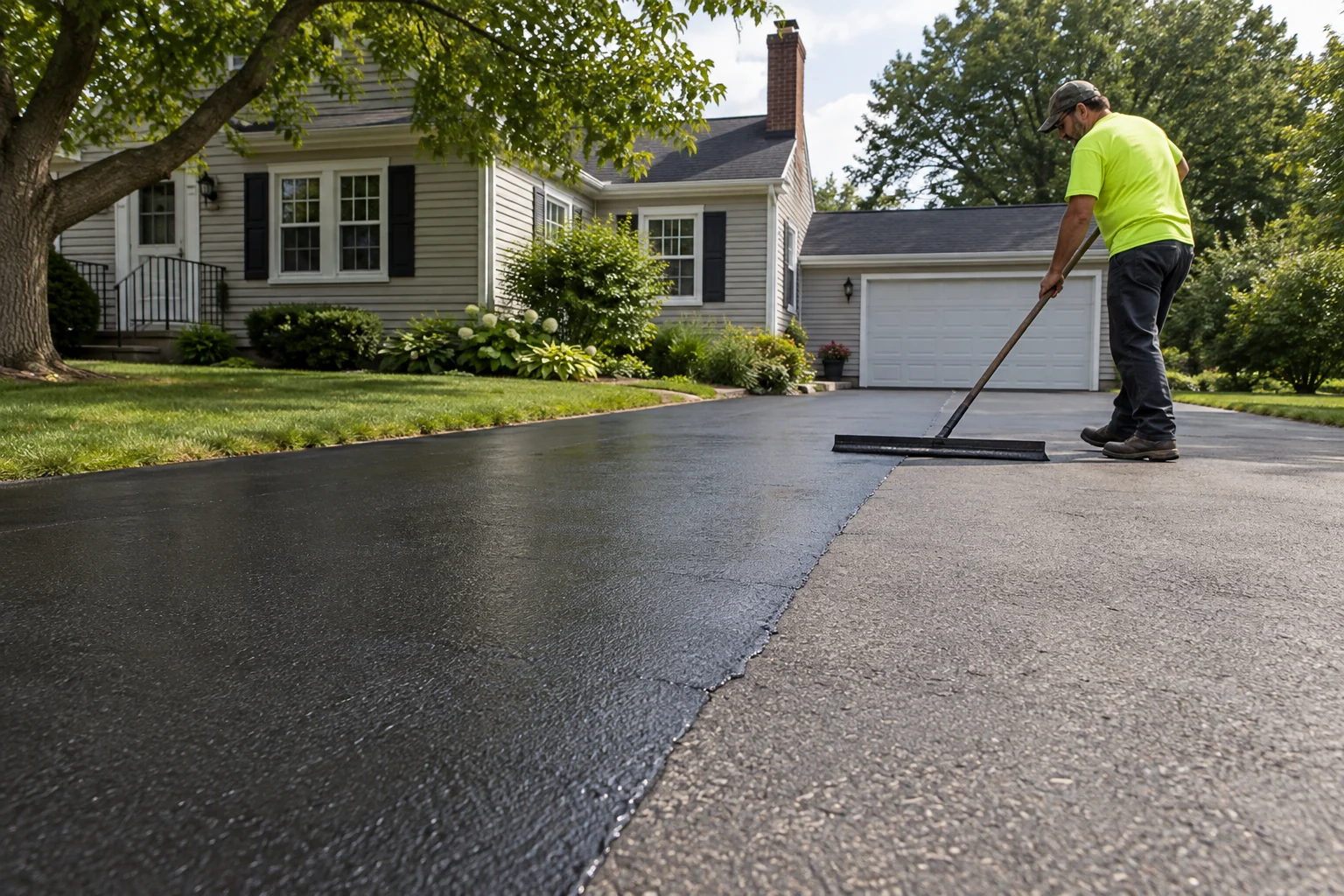
Sealcoating applies a maintenance coating to an existing asphalt surface. It can renew the appearance of suitable pavement while serving a surface-maintenance purpose. It does not add the kind of asphalt layer involved in resurfacing.
The Asphalt Institute’s engineering FAQs describe sealcoating as a treatment that can help address surface aging and small surface voids. The Institute also cautions against treating well-constructed new pavement as something that automatically needs immediate sealcoating.
That distinction helps explain why the same recommendation should not be applied to every driveway. The surface condition, previous treatments, and product requirements matter. A recently installed driveway and an older, weathered surface may need different advice even if both look reasonably intact.
What Sealcoating Cannot Repair
Sealcoating should not be expected to rebuild failed pavement, eliminate a pothole, or correct a depressed area where water collects. Those are separate concerns that need to be evaluated before a coating is applied.
Cracking deserves particular attention. A thin line in an otherwise usable surface and a broken area with an interconnected pattern of cracks can indicate different problems. Ask what the observed damage means and which repair, if any, is appropriate.
The National Asphalt Sealcoat Manufacturers Association’s recommended specifications distinguish pavement repair and preparation from applying the sealcoat itself. Areas with structural damage require attention before coating. Covering a problem with a uniform dark finish does not establish that the problem has been resolved.
If an estimate includes both repairs and sealcoating, request a breakdown. You should understand which work addresses damage, which prepares the surface, and which applies the maintenance coating.
Sealcoating and Resurfacing Are Different Projects
The terms can sound similar, but the scopes are different. Driveway resurfacing adds a new asphalt surface layer over suitable existing pavement. Sealcoating treats the existing surface with a coating.
If your main concern is widespread deterioration, recurring damaged sections, or an uneven surface, start by discussing the condition rather than requesting the least expensive dark finish. The appropriate work may involve asphalt repair, resurfacing, or replacement, depending on what an assessment finds.
A helpful question is: “What will still be visible or unresolved after this work?” That gives you a clearer picture of the result than a promise that the driveway will look new.
Preparation Belongs in the Estimate
Ask what cleaning and preparation the proposed job includes. Loose debris, existing damage, and affected areas should be discussed rather than hidden inside a single unexplained price.
Mention anything you know about the surface. That includes earlier coatings, recent asphalt repairs, and spots where vehicles have leaked fluids. You do not need to identify a product or choose a treatment yourself, but sharing that history helps frame the evaluation.
Before agreeing to the work, clarify:
- Which damaged areas will be repaired beforehand?
- What surface preparation is included?
- Are any areas excluded, and why?
- How will adjoining concrete, pavers, and other surfaces be protected?
- What product-specific care instructions will you receive?
These questions make the scope easier to understand without turning the estimate into a do-it-yourself specification.
Plan for Weather and Access Restrictions
Sealcoating needs suitable application and curing conditions. Temperature, moisture, and the selected product’s instructions affect scheduling, so a calendar date alone is not enough to determine whether work should proceed.
Ask who will communicate a weather delay and when you will receive updated access instructions. The NASMA guidance ties application and return to traffic to appropriate conditions; avoid assuming that a surface that looks dry is automatically ready for parked vehicles.
Arrange alternative parking before work begins. For a business property, also consider deliveries, waste collection, and pedestrian routes. Keep vehicles off the treated area until the contractor’s instructions allow them back.
Avoid a One-Size-Fits-All Maintenance Schedule
It is tempting to look for a single number of years between applications. A better approach is to ask whether the current pavement condition supports another treatment and what signs should prompt a future inspection.
Keep a simple record of previous work and the instructions provided with it. If a damaged area returns or a new concern develops, discuss that change rather than assuming another coat is the next step.
Maintenance decisions should follow the condition of the pavement. They should also leave room for repairs when repairs are what the surface actually needs.
Get Advice on Your Existing Asphalt
P2 Paving offers sealcoating and asphalt repair within its western New York and northwestern Pennsylvania service area. Tell us about your driveway or parking lot, including any damage or previous work you know about, so the conversation can start with the surface you have.