
Start With How the Walkway Will Be Used
Concrete and pavers can both create a useful pedestrian connection around a property. The better choice depends on more than which one looks best in a photo. Consider the route, the connection to adjoining surfaces, the appearance you want, and the maintenance you are willing to plan for.
For properties in Chautauqua County, NY, and Erie County, PA, winter use deserves a place in that conversation too. Think about how the path will be cleared and where people need dependable access throughout the year, without assuming that every property has the same conditions.
How the Two Surfaces Differ
A poured concrete sidewalk creates a continuous surface divided by joints. Its appearance can be relatively simple and restrained, which may suit a direct route beside a building or along an existing concrete connection.
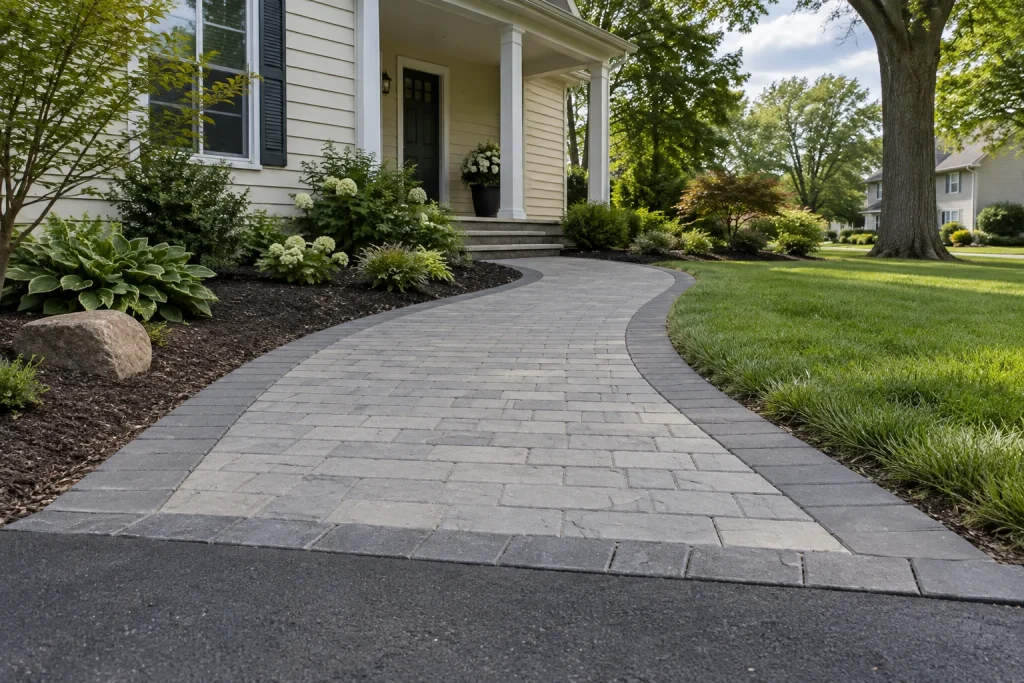
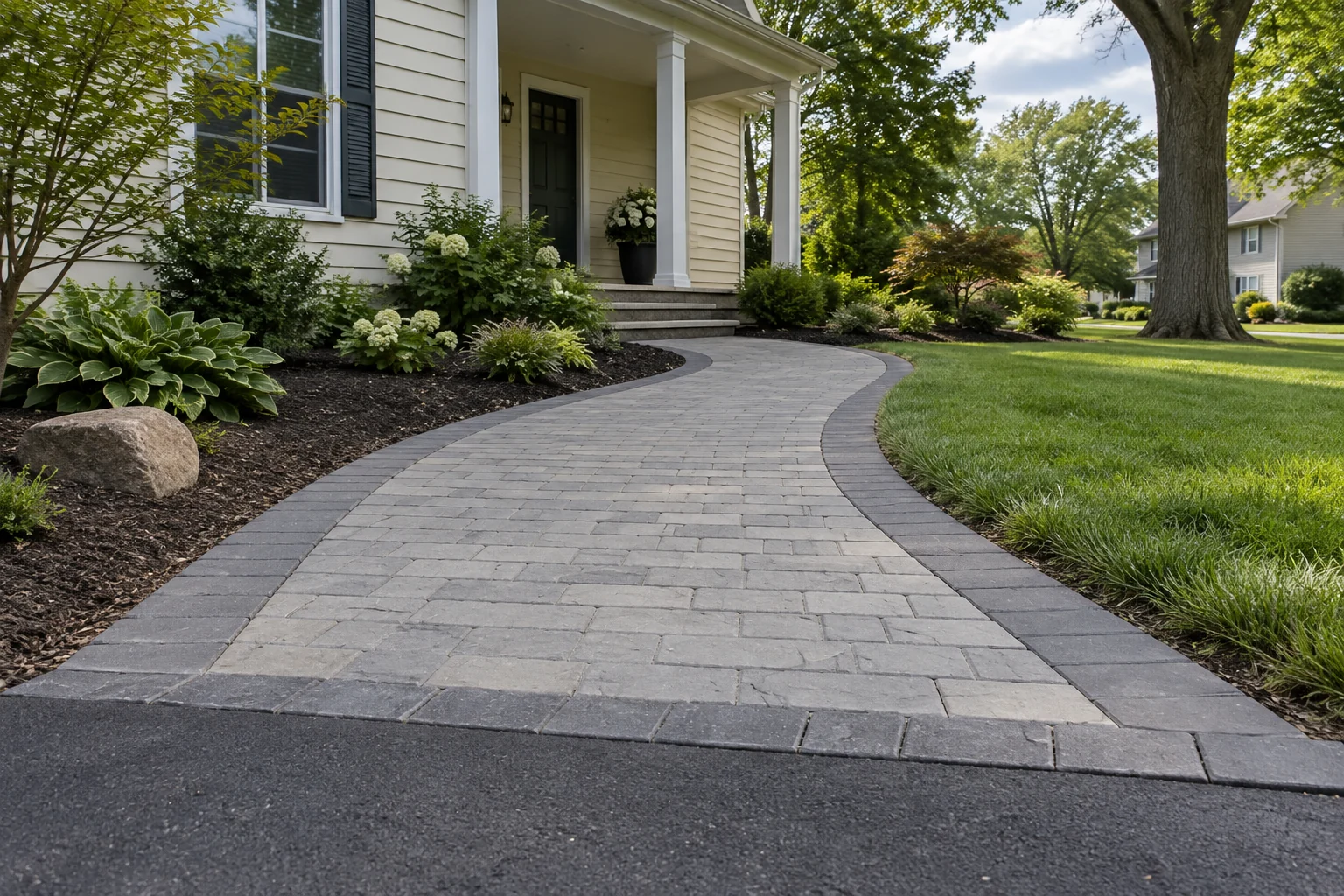
A paver walkway uses individual units arranged in a pattern. Colors, shapes, and borders provide more ways to define a front entrance or complement nearby materials. Those choices also need to fit the property rather than compete with every other feature around it.
Neither description tells you everything about performance. The visible material is only part of the installation. Preparation, support, drainage, and the way the walkway meets adjoining surfaces belong in the decision as well.
P2 Paving offers concrete sidewalk installation and repair, along with paver walkways. Explain what you want the path to connect before settling on a material.
Compare Maintenance Honestly
Avoid choosing either option on a promise of zero maintenance. A useful comparison includes what could need attention later and how a repair would affect the finished appearance.
The Concrete Masonry & Hardscapes Association’s maintenance guidance explains that individual pavers can be removed and reinstated when repairs are needed. It also discusses joint material and correcting the causes of settlement. The ability to lift a unit is useful, but it does not make an underlying problem disappear.
For poured concrete, ask how a damaged section would be repaired or replaced and what that would mean for appearance. A new section may look different from older adjoining concrete, so discuss that possibility if visual consistency is a priority.
For either surface, ask what routine observations should prompt a closer look: a raised edge, a settled area, a loose unit, or a change in how water moves across the path. Keeping the walking route usable matters more than waiting for it to look obviously worn.
Look Beyond the Surface Pattern
For pavers, edge restraint is part of the installation, not simply a decorative border. CMHA’s edge-restraint guidance explains its role in keeping the paving units contained. Ask how the proposed walkway will be supported at its edges and how that detail fits adjacent lawns or beds.
Concrete needs appropriate curing as part of construction. The American Concrete Institute explains curing in terms of maintaining suitable moisture and temperature conditions for strength development. Ask when pedestrian use is appropriate rather than assuming the surface is ready because it looks dry.
You do not need to specify a construction method yourself. The goal is to understand what preparation and finishing are included, what conditions the proposal assumes, and how the completed path will connect to the rest of the property.
Think Through the Route and Transitions
Walk the proposed route as you normally use it. Carry groceries from the driveway, approach the entrance, or consider how a visitor finds the door. That exercise can reveal a layout concern that a material sample will not.
Questions worth discussing include:
- Does the route connect the places people actually need to reach?
- How will it meet the driveway, steps, porch, or existing sidewalk?
- Is the planned width appropriate for the intended use?
- Are there existing drainage concerns to evaluate?
- Does the project involve a public sidewalk or other approval requirements?
If accessibility is a project requirement, identify it at the start and involve the appropriate design or approval professionals. Material choice alone does not establish that a walkway meets those needs.
Plan for Winter Use and Property Care
Consider who will clear the path and what equipment they normally use. A walkway should be discussed as part of the property’s maintenance routine, including the transitions where clearing equipment will enter or leave the surface.
Ask for care instructions that fit the selected material, including guidance on deicing products and snow removal. Avoid assuming that a product used elsewhere on the property is suitable for a new surface.
Also consider landscaping. Beds and lawn edges change over time, and future maintenance should not interfere with the walkway’s support or leave the walking route obstructed. Keep those relationships in mind when deciding on borders and planting areas.
Compare Complete Proposals
A meaningful price comparison covers the same route, dimensions, removal work, preparation, and transitions. A material-only comparison can overlook much of what makes the installation useful.
Ask for the scope to identify disposal of existing material, the proposed surface and finish, edge details where applicable, and any work excluded from the price. If appearance matters, agree on the material selection before treating two estimates as equivalent.
Choose the Walkway That Fits Your Property
Concrete may suit a straightforward connection, while pavers may offer the pattern and border choices you want at an entrance. The right decision should also account for construction details, future care, and everyday use.
Contact P2 Paving to discuss your sidewalk or walkway. Share the route you have in mind, photos of the existing area, and the changes that would make it work better for you.