
Start With the Condition Beneath the Surface
A driveway can look tired without needing complete replacement. It can also look reasonably intact in places while trouble develops elsewhere. Choosing between repair, resurfacing, and replacement starts with understanding the damage, how widely it extends, and whether the existing pavement can support the work you are considering.
For homeowners in Chautauqua County, NY, and Erie County, PA, that decision also needs to fit everyday life: where you park, how you reach the garage, and when you can keep vehicles off the work area. Here is how to approach the conversation before committing to a particular solution.
When a Targeted Repair May Make Sense
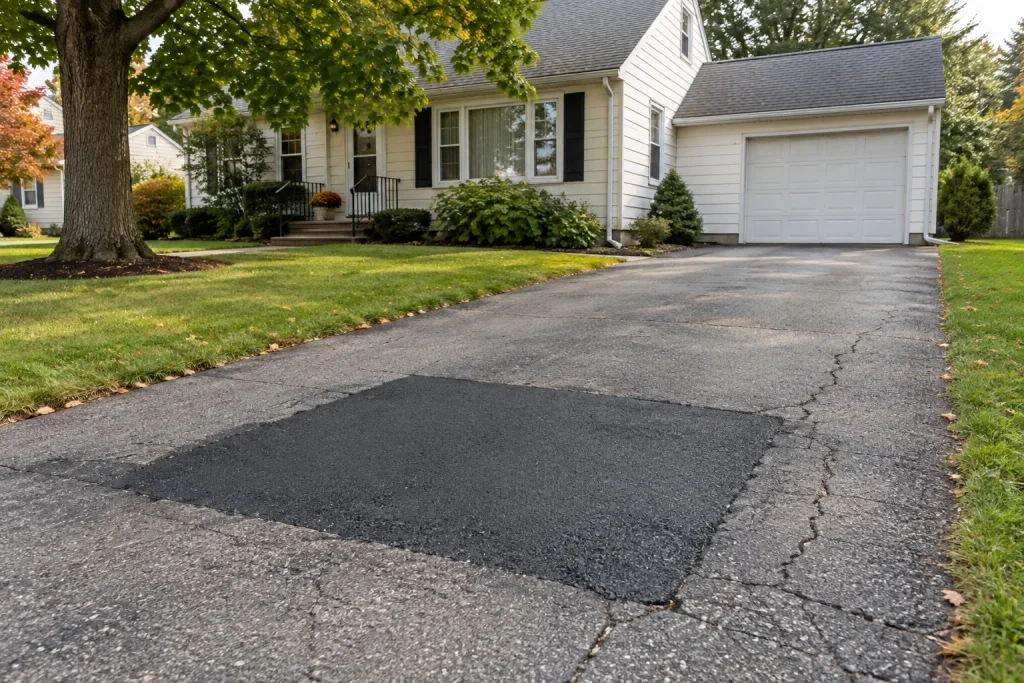
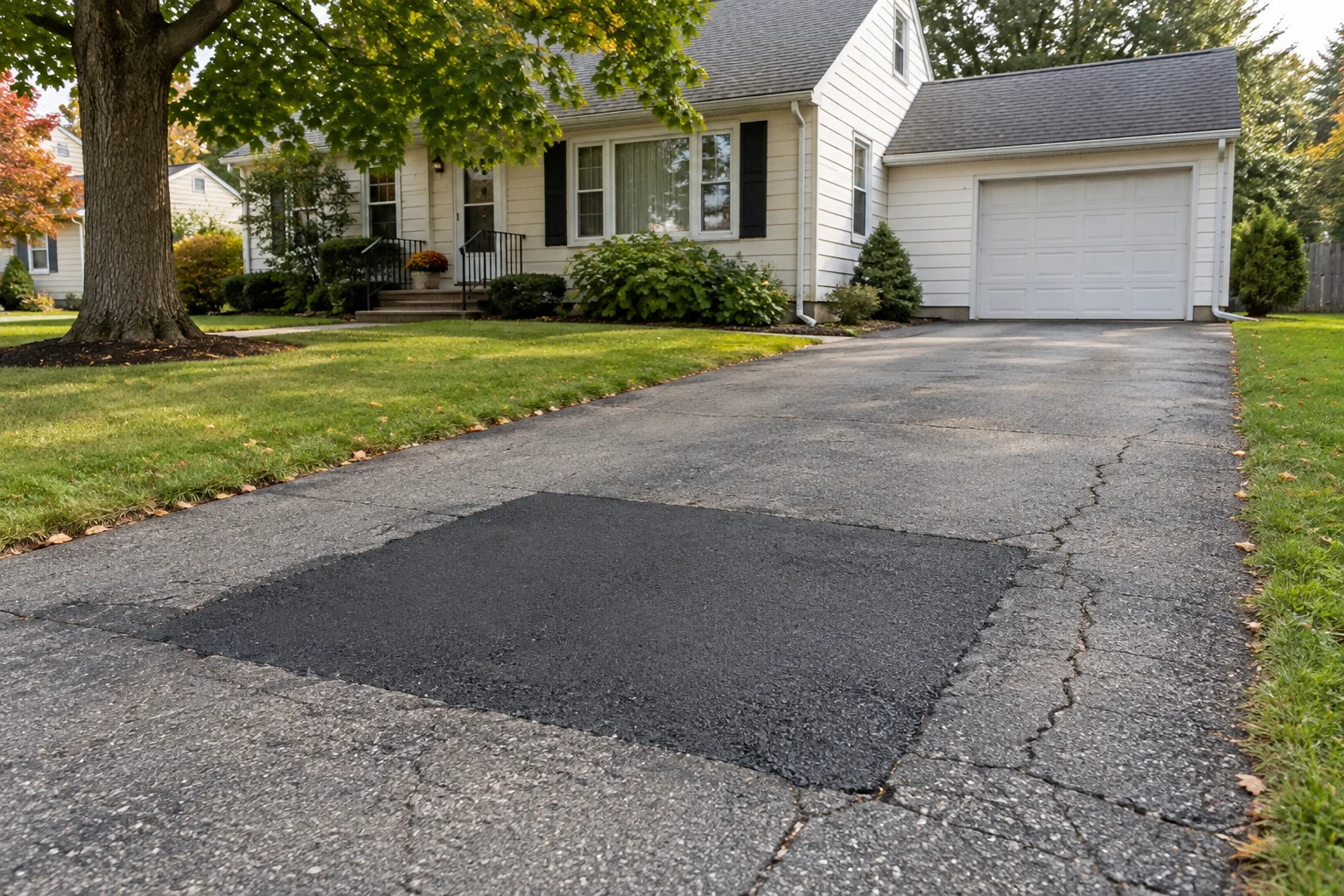
Repair focuses on a particular problem rather than covering or rebuilding the entire driveway. A localized pothole, damaged edge, or isolated failed section may call for targeted work when the surrounding pavement remains usable.
The important question is whether the visible damage is isolated. If the same area has been patched several times, ask why it keeps failing. Another patch may address the immediate opening without resolving the condition underneath it.
The Asphalt Institute’s repair guidance explains that pavement defects require different treatments and that recurring or widespread damage can call for more extensive repair. A crack, a pothole, and a depressed section should not automatically receive the same treatment.
Before asking for a repair estimate, make a short record of what you see:
- Mark the areas that concern you on a photo of the driveway.
- Note whether a problem has grown or returned after earlier work.
- Take a photo of standing water after rain, if it occurs.
- Explain any changes in use, such as heavier vehicles or additional parking.
You do not need to diagnose the pavement yourself. These observations help explain the problem more clearly when discussing asphalt repair.
What Resurfacing Actually Changes
Resurfacing adds a new asphalt surface over suitable existing pavement. It can be worth considering when the driveway needs broader surface improvement and the underlying pavement remains a suitable foundation.
That qualification matters. A new layer does not, by itself, explain or resolve every cause of sinking, recurring breakage, or poor water movement. Ask what repairs are needed before the overlay and whether the existing conditions make resurfacing appropriate at all.
Finished height also deserves attention. Adding material changes the relationship between the driveway and garage floor, nearby walks, and other fixed edges. An estimate should explain how those connections will be handled rather than leaving you to discover an awkward transition after paving.
Useful questions about driveway resurfacing include:
- What makes my existing driveway a suitable candidate?
- Which areas need repair before the new surface is installed?
- How will the finished surface meet the garage, entrance, and adjoining pavement?
- What existing concerns would remain after resurfacing?
The last question is especially helpful. It separates the improvement you are buying from problems that need a different scope of work.
When Replacement Deserves a Closer Look
Replacement involves removing and rebuilding pavement within the agreed scope. It allows problems to be addressed more extensively than a surface treatment, but the extent of excavation and base work still needs to be stated clearly.
Widespread failure, repeated repairs, or a driveway that no longer suits the property are reasons to discuss replacement. They are not a diagnosis based on appearance alone. Someone needs to evaluate the pavement and explain which conditions support that recommendation.
Replacement may also be a practical time to discuss layout. Perhaps vehicles no longer fit comfortably, the entrance is inconvenient, or you want to replace a gravel area with asphalt. Those changes affect the project and should be included before prices are compared.
Ask whether the proposed replacement includes the entire driveway, particular sections, or only the asphalt surface above an existing base. The word “replacement” can describe different scopes unless the estimate spells out what will be removed and rebuilt.
Where Sealcoating Fits Into the Decision
Sealcoating is a maintenance treatment, so it belongs in a different conversation from installing a new asphalt layer or rebuilding failed pavement. A darker finish should not be mistaken for evidence that an underlying problem has been corrected.
If a proposal combines repairs and sealcoating, ask for those items to be identified separately. You should be able to understand which work addresses damage and which work maintains the remaining surface.
Compare the Result, Not Just the Price
Imagine one estimate proposes repairing two damaged sections and another proposes resurfacing the entire driveway. Those prices are not competing offers for the same result. Start by asking why the recommended scopes differ.
Then compare what each option means for your property:
- Which problems will the work address?
- Which concerns will remain, and why?
- What preparation is included?
- How will adjoining surfaces and access be handled?
- What maintenance or future work should you plan for?
A useful estimate connects the observed condition to a specific scope. It should help you understand the tradeoff between addressing a limited problem now and investing in a broader improvement.
Talk Through the Options for Your Driveway
P2 Paving offers repair, resurfacing, and driveway paving for properties in its western New York and northwestern Pennsylvania service area. If you are unsure which approach fits, tell us what you are seeing and what you want to change. Start with the problem, then work toward the right scope.